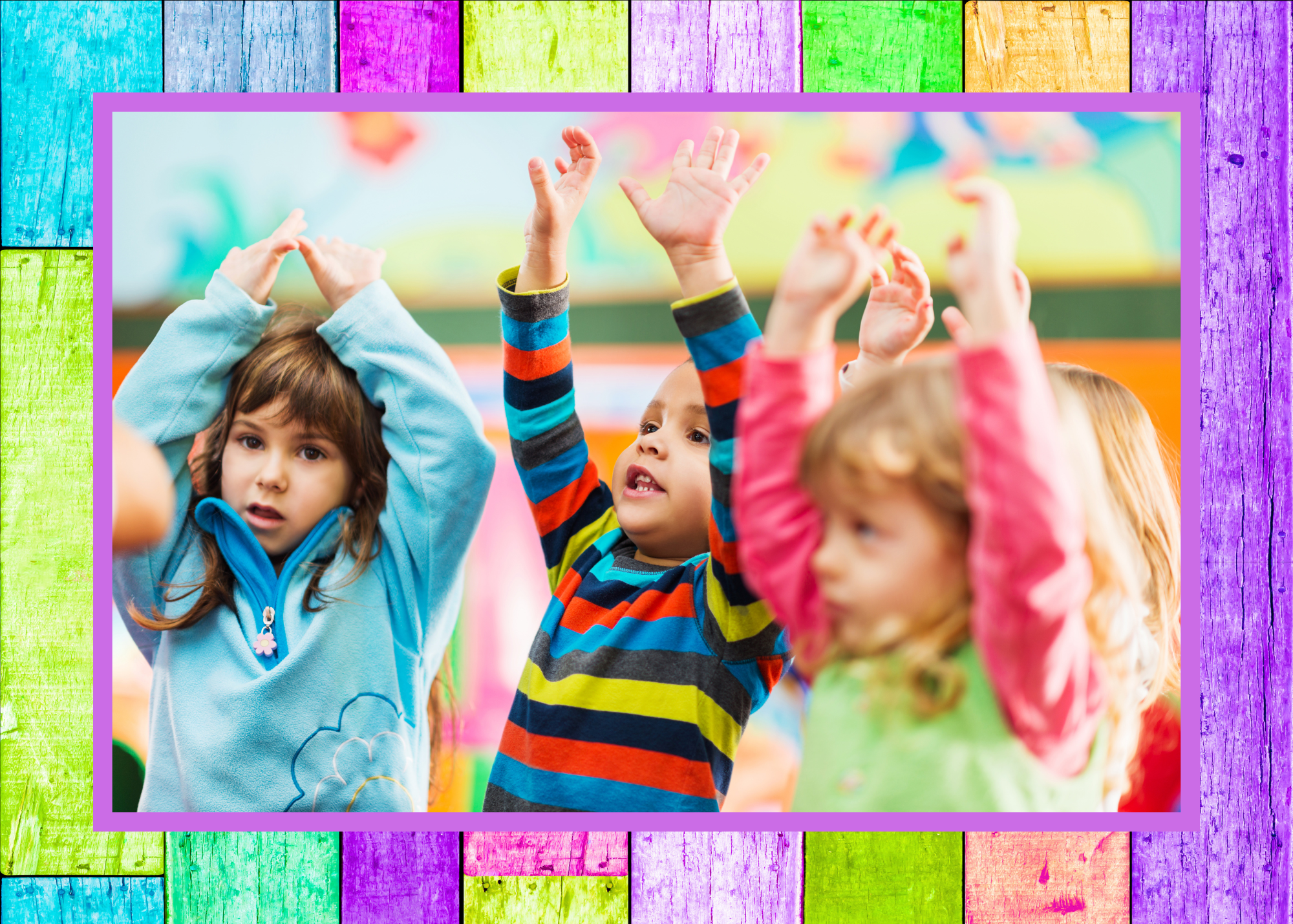
Six types of play that benefit 3–5-year olds’ learning
And how to incorporate that into your KidMin
- Constructive play
- Sensory play
- Physical play
- Pretend play
- Story play
- Music play

Constructive Play
Constructive play is building things.
Building things is beneficial to young minds. They see how things go together — and come apart! Constructive play encourages spatial recognition, understanding of balance, persistence, logic formation, and a sense of accomplishment. For more information on the benefits, check out this article here.
But, how to include it in your KidMin?
Constructive play can be included by doing such things as stacking blocks to build the walls of Jericho, using Lego to build a Nativity scene, or making a house out of magnetic tiles for the disciples to lower the man in to be healed.

Sensory Play
Sensory play is feeling things.
Sensory play is the use of different textures. Sensory tables are tables are made by filling them with something like sand, rice, or water and then adding items of different textures. These are fun to use and can be done small scale in a small tub or bowl. For more information on sensory place click here. But there are many other ways to incorporate sensory play.
But, how to include it in your KidMin?
Sensory play is where craft time plays a big role. All sorts of textures can be used in craft time. Tissue paper, finger paint, and glitter all have different textures. Here are some fun examples of texture-forward crafts. Even simple coloring pages can be enhanced with texture. Add straw to a manger scene, glue on yellow tissue over a sun, cut out felt clothes to put on Bible characters, or glue real sand onto the desert with Moses.

Physical Play
Physical play is using large motor skills.
Physical play is getting up and moving. It’s running, jumping, dancing, spinning. It’s the use and coordination of large motor skills. For the benefits and some ideas, click here.
But, how to include it in your KidMin?
Two of my favorite ways to use in KidMin are dancing and animal imitation. Dancing and full-body motions are great for kids. They are not, however, a replacement for worship. Playing worship music and having kiddos dance to it is fantastic and highly recommended. But make certain they also have a time of worship where they are aware of what they are doing. Big dance song are great starters to get their attention or for play time. My other favorite is walking around the room like different animals. Easter? Hop like a bunny? Palm Sunday? Walk like a donkey. New life? Butterfly. Daniel? Lion. Noah’s Ark? Endless possibilities. I like to start with a random fun animal — maybe stomp like an elephant — and go through a few, landing on the one relevant to our learning.
Pretend Play

Pretend play is make-believe.
Pretend play is putting yourself in someone else’s shoes. There are many benefits -check out this article here for more — but my personal favorite is the learning of empathy. When littles pretend to be someone else, they start to see things from a different perspective. In children’s ministry, this is crucial.
But, how to include it in your KidMin?
Putting littles in the story gives them new perspective. Instead of learning about Peter walking on water, they imagine it, they fell it. Get your kids involved in the story. Allow them to pretend as part of the story. Wearing a crown is different than seeing a picture of a crown. Holding a finger puppet fosters empathy and understanding. Even having them close their eyes to picture something is useful.
Story Play

Story play is the use of stories.
Story play is using stories. Think of story time at your local library. Building literacy is crucial to littles. Here is an article furthering that.
But, how to include it in your KidMin?
This is something we do every week. We use a Bible story. Combining it with pretend play can make it loads of fun and real to them. Literacy is important. But we can also foster Biblical literacy. Teach littles what the Bible is: God’s true book. Use a real Bible rather than an app in class. Encourage littles to bring Bibles. For more of my thoughts on that, see my blog post here. Littles can learn that the Bible is from God. They can learn that the Bible is in two parts, Old and New Testaments. They can learn about books, chapters, and verses. Everything you teach is foundational to their later understand of God.
Music Play

Music play is the use of music in play.
Preschoolers are at an age where music can be fun play and it can be actual music learning. They are growing out of the mommy-and-me-music-class stage which is all about experience and moving into a cognitive understand of music. They are able to memorize lyrics and melodies. They are beginning to understand antonyms like loud/soft, fast/slow, and high/low (all useful in music).
But, how to include it in your KidMin?
Music is my favorite. I love to lead music with kids’ choirs and children’s ministries and write music and curriculum. I also sing with a master chorale here in Los Angeles and I’ve taught voice lessons and music theory to children. Music is my work and my play and my worship. Knowing when to separate those and when to combine those is tricky. Music play is great for all littles. Explore instruments: shakers, bells, drums, etc. Listen to different styles of music. Play freeze dance. Note the antonyms. All of that is great. But in the church, we have more responsibility. Music play and music worship aren’t always the same thing. Our KidMin choir curriculum is designed to teach littles what they are singing about so that their singing is true worship. But even if you don’t use our curriculum, during choir or during worship you need to teach the littles what they’re singing about. Worship needs to be intentional. And KidMin choir is a great way to instill learning, worship, and play.
Which are your favorite ways to play in KidMin?